Direct Current
Direct Current (DC) is constant and travels in the same direction. A major advantage of D.C. for magnetisation is its deeper penetration into the metal thus enabling sub-surface discontinuities to be revealed. D.C. may also allow a level of residual magnetism to held by the specimen (due to the deeper penetration of the waveform), which may allow the operator more time to evaluate an indication. However residual magnetism is not always an advantage and may present problems if complete demagnetisation of the component is required.
The technique known as D.C. surge employs a D.C. current which initially starts with a very high value and rapidly reduces to a lower value for the majority of the shot duration.
The advantage of this is:
- Less chance of damaging the object from a continuous high current.
- Improved particle movement.
- Ideal for detection of deep lying discontinuities.
D.C. current may be obtained in various forms, either from batteries or rectified A.C., each having their own advantages and disadvantages.
Direct current from battery packs
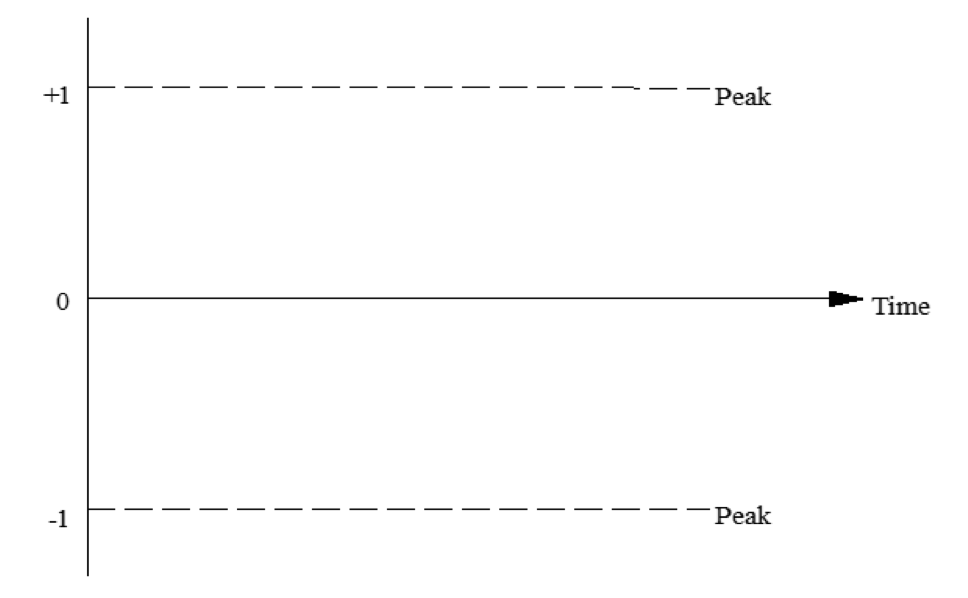
Advantages include:
- May not require mains electrical supply.
- Sub-surface discontinuities may be detected.
Disadvantages include:
- Weight of batteries.
- Limited battery life (high current draw).
- Less reliable for detection of surface discontinuities than AC.
- Continuous current flow does not produce particle vibration and will not therefore enhance discontinuity detection. Because of this, continuous DC should not be used with dry powders which require a pulsating magnetic field to provide mobility to the powder when it is applied to the test surface.